Barbras Last Mile
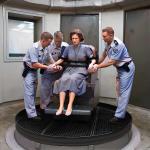
Forum Home > Public : Images > Barbras Last MileBarbra G going to the chamber and her final farewell with the matron enjoy.
You need to be logged in to view attachments.

I don't know if you have ever seen the real Barbara Graham or not, but here she is (not Susan Hayward). By the was she copped out to the murder the night before her execution to the Assistant Warden at San Quentin. For some stupid reason he kept it a secret until after he retired. Lots of hullabaloo over that as so many dorks claimed she was innocent and wrote stories etc.
You need to be logged in to view attachments.

Oh, this looks like a scene from a classic movie that was unfortunately never made.
I like the idea that lady, prison officer, saw Barbara in her luxurious vintage lingerie when she was getting dressed to go into the Gas chamber. This is how their mutual tenderness appeared. )) Elain, thanks!
I like the idea that lady, prison officer, saw Barbara in her luxurious vintage lingerie when she was getting dressed to go into the Gas chamber. This is how their mutual tenderness appeared. )) Elain, thanks!
The story about her confessing to the warden was discredited by the nurse who was assigned to watch her. She was with Barbara 24/7 and she testified under oath before the California State Senate that no such confession was made and by law a woman had to be present with her at all times, even during a visit from the warden. Warden Teets never publicly made any claims that Barbara had confessed to him. The story came up after the movie made people start to ask questions and was promoted by J Miller Levy, the prosecutor and some of his friends. I highly recommend Marsha Clark's book, 'Trial By Ambush,' about Barbara Graham's case. Marsha Clark, former LA prosecutor who prosecuted OJ Simpson, idolized J Miller Leavy as her hero until she started doing research on Barbara Granham's case.
Then there are Barbara's "confessions." Louis "Red" Nelson was associate warden under Harley Teets, and later succeeded him in that position. A year after Barbara's execution, Nelson had been on the Row interviewing one of the condemned men about a problem with his visitors list. When the interview was over, the prisoner suddenly broke down and spontaneously not only confessed to the crime for which he had been convicted (which he had never previously admitted), but also described in gory and disgusting detail how he had butchered his victim. Later that day, Nelson described the incident to Teets, complaining that he strongly disliked having to hear such stories. Teets replied, "I know exactly how you feel, Red. Barbara Graham told me how she pistol-whipped Mabel Monohan and split her head open. I've been carrying that load for a long time."
Although Teets did not say when Barbara had told him that, there had been any number of opportunities. Prior to being brought to San Quentin for her execution, Barbara had been housed for several months in a private section of the San Quentin hospital, after threats had been made on her life at the women's prison in Corona. Teets had visited her several times a week on inspection rounds and for private talks when she asked to see him.
Nelson made a note in his daybook of the conversation with Teets, which took place October 24, 1956. He had no reason not to believe it; Teets was not a man to lie, especially in light of the fact that he had a serious heart condition and frequently told people that he, like the men on the Row, was also "living on borrowed time." He died from heart failure less than a year later. Nelson never told anyone what Teets had said until several years later when he met J. Miller Leavy, Barbara's prosecutor, and repeated it to him.
The Teets story was verified, in a way, when Marin County district attorney
William O. Weissich confided to Leavy that the late warden had told him exactly the same thing. Two days before he died, Teets had attended a meeting at the state attorney general's office with Weissich, and the two men had then lunched together at Fisherman's Wharf. After lunch, Weissich had driven Teets back to San Quentin. Teets, whose health was noticeably failing, spoke of the many strains of the warden's office, especially dealing with death row inmates. He said it had been a terrible burden to him to carry around Barbara Graham's confession in secret as he had for two years. Weissich, who was personally opposed to capital punishment, expressed great surprise at the revelation and inquired why Teets had not revealed the confession after the execution. Teets explained that he felt very strongly that employees of the Department of Corrections should not concern themselves with guilt or innocence, but only carry out the orders of the court. And, he himself did not want to be responsible for Barbara's family and friends learning of her guilt, if they believed her innocent.
Teets requested that Weissich keep the matter confidential, and Weissich did, for two years following the death of Teets, until the day Leavy shared with him the story Red Nelson had told Leavy.
The other "confession" that has floated around almost since the day of the execution, was that while leaning her head on Father Daniel McAlister's shoulder, waiting for the matron to bring her a blindfold, Barbara had whispered a confession to the priest. It was a perfect time, a perfect opportunity, and Barbara's lips had been seen to move. But Father McAlister would never reveal what she said. "I refuse to say what Mrs. Graham may or may not have confessed," he stated whenever asked. "The confessional is not to be debased in this manner."
Does that mean that her words were confessional in nature' If they had not been, if Barbara had simply said, "I wish she'd hurry with the blindfold, Father," or something similarly innocuous, wouldn't the priest have felt free to repeat it' Does not the fact that Father McAlister never discussed what she said, in its own way arouse suspicion that she did confess' And might not the fact that Barbara was buried in hallowed Catholic ground support that position' There are no easy answers. In the end, it is left for everyone to decide individually.
One person who did get to know Barbara quite well while she was waiting to die was reporter Bernice Freeman. Berni had once been married to a San Quentin officer, and years later, as the single parent of four growing daughters, she supported her family as a reporter for the San Francisco Chronicle. Already well known at San Quentin because of having been a guard's wife, she was assigned to cover the legendary prison for nearly 20 years. Always stylishly dress, perfectly coifed, every inch a lady, she earned a unique reputation among staff and inmate alike by never violating the confidence of either.
Barbara greatly admired Berni Freeman, who later became Bernice Freeman Davis when she married respected admiralty attorney Mansfield Davis. Whenever she visited Barbara, Berni was always complimented on her appearance and wardrobe. Sometimes the praise was wistful, as if Barbara wished she too could have turned out like that.
Their long talks together were more "female gab-fests" than interviews. They talked about motherhood, men, female aches and pains, unwanted weight gain, cooking. When the subject of her crime came up, Barbara vehemently declared her innocence, and, about John True, snarled, "That bastard! He lied to save his own neck! He knows I had nothing to do with the Monohan caper!"
As to whether Perkins or Santo had ever been her lover, she casually replied, "Nope."
But when Berni got too close to what might be the truth, Barbara backed off. As when Berni asked about the police finding the three of them nude and Barbara intimate with Santo when they broke in, Barbara replied aloofly, "I honestly can't remember."
An astute judge of people, with a keenly perceptive mind, Bernice Freeman's final analysis of Barbara Graham was that while she was a "beautiful and strangely charming young woman," she was also "utterly amoral." She had "no conception of the difference between right and wrong. She did what she pleased, never taking time to think, never worrying about the consequences. She neither knew nor cared whether or not an act was criminal, indecent, or immoral. If she had never done it before, she wanted to try it, and if she found it interesting, she wanted to repeat it."
That would seem to pretty much sum up the real-life Barbara Graham. Except for one sad thing which needs to be added.
There was a time when she was a pretty little girl, and nobody loved her.
Bibliography
Books:
Anderson, Clinton H. Beverly Hills is My Beat. New York, 1962. Popular Library.
Brian, Dennis. Murderers Die. New York, 1986. St. Martin's Press.
Davis, Bernice Freeman. Desperate and the Damned, The. New York, 1961. Thomas Y. Crowell Company.
Eshelman, Byron E. Death Row Chaplain. Engelwood Cliff, NJ, 1962. Prentice-Hall, Inc.
Gaute, J. H. H. and Odell, Robin. The Murderers Who's Who. Montreal, 1979. Optimum Publishing, Ltd.
Lamott, Kenneth. Chronicles of San Quentin. New York, 1961. David McKay Co.
Linet, Beverly. Portrait of a Survivor -- Susan Hayward. New York, 1980. Antheneum.
Nash, Jay Robert. Encyclopedia of World Crime, Volume 2. Wilmette, Illinois. Crimebooks, Inc.
Parish, James Robert. Prison Pictures from Hollywood. Jefferson, NC, 1991. McFarland & Company.
Sifakis, Carl. Encyclopedia of American Crime. New York, 1961. Ballantine Books.
Films:
I Want to Live! United Artists, 1958. Nelson Gidding & Don M. Mankiewicz, screenplay.
I Want to Live! ABC-TV, 1983. Don M. Mankiewicz, teleplay.
About the Author
Clark Howard
Clark Howard has been a full-time professional writer for more than thirty years.
His work ranges from 21 contemporary novels and true-crime books, to more than 200 short stories and articles in the mystery, western, and true crime genres.
He has won the Edgar Allan Poe award and four Ellery Queen Readers' awards for short story writing, and has a dozen nominations in the short story and true crime categories from the Mystery Writers of America, Western Writers of America, and Private Eye Writers of America.
He has also written a boxing column for The Ring magazine, and has had his work adapted for both film and television.
Writing for The Crime Library is his first venture into electronic publishing.
Although Teets did not say when Barbara had told him that, there had been any number of opportunities. Prior to being brought to San Quentin for her execution, Barbara had been housed for several months in a private section of the San Quentin hospital, after threats had been made on her life at the women's prison in Corona. Teets had visited her several times a week on inspection rounds and for private talks when she asked to see him.
Nelson made a note in his daybook of the conversation with Teets, which took place October 24, 1956. He had no reason not to believe it; Teets was not a man to lie, especially in light of the fact that he had a serious heart condition and frequently told people that he, like the men on the Row, was also "living on borrowed time." He died from heart failure less than a year later. Nelson never told anyone what Teets had said until several years later when he met J. Miller Leavy, Barbara's prosecutor, and repeated it to him.
The Teets story was verified, in a way, when Marin County district attorney
William O. Weissich confided to Leavy that the late warden had told him exactly the same thing. Two days before he died, Teets had attended a meeting at the state attorney general's office with Weissich, and the two men had then lunched together at Fisherman's Wharf. After lunch, Weissich had driven Teets back to San Quentin. Teets, whose health was noticeably failing, spoke of the many strains of the warden's office, especially dealing with death row inmates. He said it had been a terrible burden to him to carry around Barbara Graham's confession in secret as he had for two years. Weissich, who was personally opposed to capital punishment, expressed great surprise at the revelation and inquired why Teets had not revealed the confession after the execution. Teets explained that he felt very strongly that employees of the Department of Corrections should not concern themselves with guilt or innocence, but only carry out the orders of the court. And, he himself did not want to be responsible for Barbara's family and friends learning of her guilt, if they believed her innocent.
Teets requested that Weissich keep the matter confidential, and Weissich did, for two years following the death of Teets, until the day Leavy shared with him the story Red Nelson had told Leavy.
The other "confession" that has floated around almost since the day of the execution, was that while leaning her head on Father Daniel McAlister's shoulder, waiting for the matron to bring her a blindfold, Barbara had whispered a confession to the priest. It was a perfect time, a perfect opportunity, and Barbara's lips had been seen to move. But Father McAlister would never reveal what she said. "I refuse to say what Mrs. Graham may or may not have confessed," he stated whenever asked. "The confessional is not to be debased in this manner."
Does that mean that her words were confessional in nature' If they had not been, if Barbara had simply said, "I wish she'd hurry with the blindfold, Father," or something similarly innocuous, wouldn't the priest have felt free to repeat it' Does not the fact that Father McAlister never discussed what she said, in its own way arouse suspicion that she did confess' And might not the fact that Barbara was buried in hallowed Catholic ground support that position' There are no easy answers. In the end, it is left for everyone to decide individually.
One person who did get to know Barbara quite well while she was waiting to die was reporter Bernice Freeman. Berni had once been married to a San Quentin officer, and years later, as the single parent of four growing daughters, she supported her family as a reporter for the San Francisco Chronicle. Already well known at San Quentin because of having been a guard's wife, she was assigned to cover the legendary prison for nearly 20 years. Always stylishly dress, perfectly coifed, every inch a lady, she earned a unique reputation among staff and inmate alike by never violating the confidence of either.
Barbara greatly admired Berni Freeman, who later became Bernice Freeman Davis when she married respected admiralty attorney Mansfield Davis. Whenever she visited Barbara, Berni was always complimented on her appearance and wardrobe. Sometimes the praise was wistful, as if Barbara wished she too could have turned out like that.
Their long talks together were more "female gab-fests" than interviews. They talked about motherhood, men, female aches and pains, unwanted weight gain, cooking. When the subject of her crime came up, Barbara vehemently declared her innocence, and, about John True, snarled, "That bastard! He lied to save his own neck! He knows I had nothing to do with the Monohan caper!"
As to whether Perkins or Santo had ever been her lover, she casually replied, "Nope."
But when Berni got too close to what might be the truth, Barbara backed off. As when Berni asked about the police finding the three of them nude and Barbara intimate with Santo when they broke in, Barbara replied aloofly, "I honestly can't remember."
An astute judge of people, with a keenly perceptive mind, Bernice Freeman's final analysis of Barbara Graham was that while she was a "beautiful and strangely charming young woman," she was also "utterly amoral." She had "no conception of the difference between right and wrong. She did what she pleased, never taking time to think, never worrying about the consequences. She neither knew nor cared whether or not an act was criminal, indecent, or immoral. If she had never done it before, she wanted to try it, and if she found it interesting, she wanted to repeat it."
That would seem to pretty much sum up the real-life Barbara Graham. Except for one sad thing which needs to be added.
There was a time when she was a pretty little girl, and nobody loved her.
Bibliography
Books:
Anderson, Clinton H. Beverly Hills is My Beat. New York, 1962. Popular Library.
Brian, Dennis. Murderers Die. New York, 1986. St. Martin's Press.
Davis, Bernice Freeman. Desperate and the Damned, The. New York, 1961. Thomas Y. Crowell Company.
Eshelman, Byron E. Death Row Chaplain. Engelwood Cliff, NJ, 1962. Prentice-Hall, Inc.
Gaute, J. H. H. and Odell, Robin. The Murderers Who's Who. Montreal, 1979. Optimum Publishing, Ltd.
Lamott, Kenneth. Chronicles of San Quentin. New York, 1961. David McKay Co.
Linet, Beverly. Portrait of a Survivor -- Susan Hayward. New York, 1980. Antheneum.
Nash, Jay Robert. Encyclopedia of World Crime, Volume 2. Wilmette, Illinois. Crimebooks, Inc.
Parish, James Robert. Prison Pictures from Hollywood. Jefferson, NC, 1991. McFarland & Company.
Sifakis, Carl. Encyclopedia of American Crime. New York, 1961. Ballantine Books.
Films:
I Want to Live! United Artists, 1958. Nelson Gidding & Don M. Mankiewicz, screenplay.
I Want to Live! ABC-TV, 1983. Don M. Mankiewicz, teleplay.
About the Author
Clark Howard
Clark Howard has been a full-time professional writer for more than thirty years.
His work ranges from 21 contemporary novels and true-crime books, to more than 200 short stories and articles in the mystery, western, and true crime genres.
He has won the Edgar Allan Poe award and four Ellery Queen Readers' awards for short story writing, and has a dozen nominations in the short story and true crime categories from the Mystery Writers of America, Western Writers of America, and Private Eye Writers of America.
He has also written a boxing column for The Ring magazine, and has had his work adapted for both film and television.
Writing for The Crime Library is his first venture into electronic publishing.
https://murderpedia.org/female.G/g/graham-barbara.htm This is my source for the claim, Teets claimed he had Private conversations with Barbara so the whole thing is just what do you want to believe.
Forum > Public / Images > Barbras Last Mile